

The digital landscape in 2026 is one of relentless change and escalating demand. Businesses, from burgeoning startups to global enterprises, are constantly striving for unparalleled uptime, robust security, and the flexibility to innovate at lightning speed. In this dynamic environment, relying on a single cloud provider, no matter how powerful, can introduce significant risks and limitations.
This is precisely why Multi-Cloud Hosting Strategies for 2026 Reliability have emerged as not just a best practice, but a foundational necessity for any organization serious about their digital future. Imagine a scenario where a critical application suddenly experiences an outage due to a regional failure at a single cloud provider; for a multi-cloud setup, this often becomes a mere blip, as traffic seamlessly redirects to an alternative provider, ensuring uninterrupted service and peace of mind.
Key Takeaways
- Enhanced Resilience & Disaster Recovery: Multi-cloud significantly reduces single points of failure, providing superior disaster recovery capabilities and business continuity.
- Optimized Performance & Latency: Deploying workloads closer to users across different cloud regions and providers can drastically improve application performance and reduce latency.
- Cost Efficiency & Vendor Negotiation Leverage: By strategically distributing workloads and data, organizations can leverage competitive pricing and avoid vendor lock-in, leading to better cost management.
- Compliance & Data Sovereignty: Multi-cloud allows businesses to meet specific regulatory and data residency requirements by choosing providers with data centers in specific geographic locations.
- Innovation & Best-of-Breed Services: Access to diverse, specialized services from multiple cloud providers enables organizations to pick the best tools for each specific workload, fostering innovation.
Understanding the Multi-Cloud Landscape in 2026
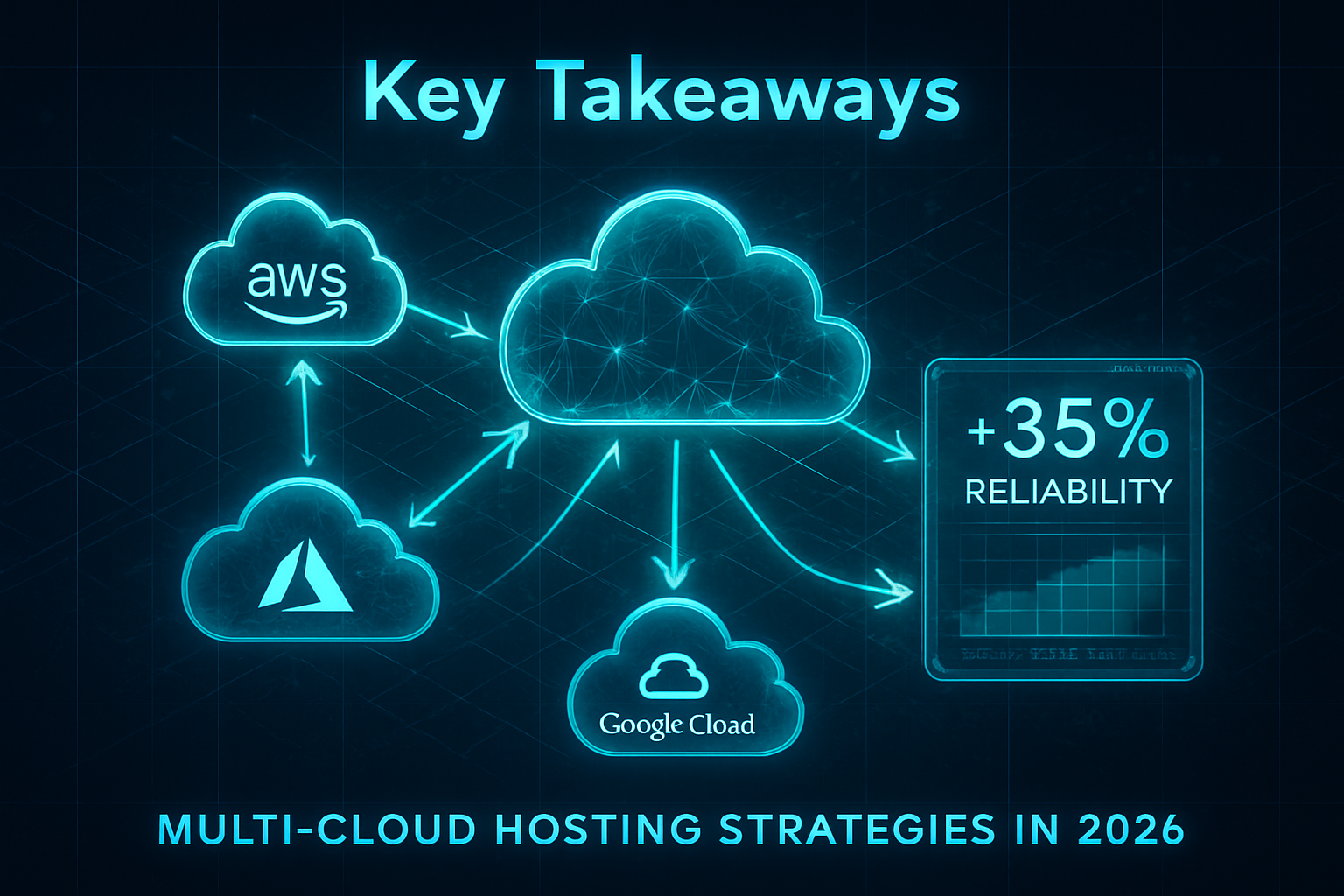
The concept of multi-cloud involves using two or more cloud computing services from different public cloud providers, such as AWS, Azure, Google Cloud, and others, to host various workloads or even components of a single application. It’s distinct from a hybrid cloud, which typically combines public cloud with private on-premises infrastructure. In 2026, the complexity and sophistication of multi-cloud adoption have grown exponentially, moving beyond simple disaster recovery to become a strategic pillar for digital transformation.
Consider the story of “Nexus Innovations,” a medium-sized e-commerce company that, just a few years ago, was entirely reliant on a single prominent cloud provider. One Black Friday, during their peak sales hour, a regional outage at their provider brought their entire platform down for nearly two hours. The financial loss was devastating, but the damage to their brand reputation was even greater. This painful experience was a catalyst for Nexus Innovations to adopt Multi-Cloud Hosting Strategies for 2026 Reliability. They now distribute their inventory management system on one cloud, their customer-facing storefront on another, and their analytics engine on a third, ensuring that no single failure can cripple their operations. This kind of resilience is what modern businesses demand.
The Evolution of Cloud Computing to Multi-Cloud
Initially, businesses gravitated towards the cloud for its scalability and cost savings. Single-cloud adoption was the norm. However, as organizations matured in their cloud journey, they began to encounter challenges:
- Vendor Lock-in: Becoming overly dependent on one provider’s ecosystem, making it difficult and expensive to switch.
- Regional Outages: The risk of a single point of failure impacting critical services.
- Specific Service Needs: One provider might excel in AI/ML, while another offers superior data analytics or serverless capabilities.
- Regulatory Compliance: Different data residency laws requiring storage in specific geographical locations.
These challenges spurred the industry towards multi-cloud. Today, Multi-Cloud Hosting Strategies for 2026 Reliability are not just about mitigating risks but are integral to optimizing performance, reducing costs, and driving innovation.
Designing Robust Multi-Cloud Architectures for 2026
Building a multi-cloud environment is more than simply signing up with multiple providers. It requires careful planning, architectural design, and a deep understanding of workload characteristics. The goal is to create a cohesive, resilient, and performant ecosystem that leverages the strengths of each cloud.
Key Architectural Considerations
- Workload Placement Strategy: This is perhaps the most critical decision. Where should each application or service component reside?
- Cost Optimization: Place less demanding workloads or those with specific burst requirements on providers with favorable pricing models.
- Performance: Host applications sensitive to latency closer to your user base or in regions with superior network interconnectivity.
- Compliance: Ensure data is stored in regions that meet specific regulatory requirements (e.g., GDPR, HIPAA).
- Specialized Services: Leverage unique services offered by different providers, such as advanced AI/ML capabilities or specific database solutions.
- Network Connectivity: Seamless and secure communication between clouds is paramount.
- Direct Connect/Interconnect: Utilize dedicated connections (e.g., AWS Direct Connect, Azure ExpressRoute, Google Cloud Interconnect) for high-bandwidth, low-latency, and secure links between your on-premises data centers and cloud providers, and increasingly, between different cloud environments via third-party exchange points.
- VPN Tunnels: For less critical or smaller-scale inter-cloud communication, secure VPN tunnels can be established.
- Software-Defined Wide Area Network (SD-WAN): SD-WAN solutions can provide intelligent traffic routing, optimization, and security across multi-cloud environments, enhancing control and visibility.
- Data Management and Portability: Data is the lifeblood of any application.
- Data Replication: Implement robust data replication strategies across clouds for disaster recovery and business continuity.
- Data Synchronization: Ensure data consistency across distributed environments, especially for active-active multi-cloud setups.
- Cloud-Agnostic Databases: Consider using database services or solutions that are not tied to a single cloud provider, facilitating easier migration and resilience.
- Object Storage: Leverage object storage services (e.g., S3, Blob Storage, Cloud Storage) which offer high durability and availability, often as a common layer for data sharing.
“A true multi-cloud strategy isn’t about hedging your bets; it’s about playing to the strengths of every hand in your deck.” – Leading Cloud Architect 💡
- Identity and Access Management (IAM): A unified IAM strategy is crucial for security and governance.
- Centralized Identity Provider: Use a central identity provider (e.g., Okta, Auth0, or an enterprise-grade IAM solution) to manage user identities and access across all cloud environments.
- Role-Based Access Control (RBAC): Implement consistent RBAC policies across clouds to ensure users and services only have the minimum necessary permissions.
- Unified Monitoring and Management: Gaining visibility and control across disparate environments is a significant challenge.
- Cloud Management Platforms (CMPs): Invest in CMPs that provide a single pane of glass for monitoring performance, costs, security, and resource utilization across multiple clouds.
- Observability Tools: Implement robust observability solutions that collect logs, metrics, and traces from all components, enabling quick troubleshooting and performance analysis.
- Automation: Automate deployment, scaling, and management tasks using tools like Terraform, Ansible, or Kubernetes, which are designed to work across various cloud platforms. You can find more information on efficient cloud hosting solutions at Best Cloud Hosting 2026: Scalable Solutions for Businesses.
Selecting the Right Cloud Providers for Multi-Cloud Hosting Strategies for 2026 Reliability
Choosing which cloud providers to incorporate into your multi-cloud strategy is a critical decision that should align with your business objectives, technical requirements, and financial considerations. It’s not about picking the “best” providers universally, but the “best fit” for your specific needs.
Factors for Consideration:
- Service Offerings: Evaluate the breadth and depth of services. Does one excel in serverless computing, another in AI/ML, and a third in specialized databases?
- Geographic Reach: Do the providers have data centers in regions critical for your user base or compliance requirements?
- Pricing Models: Compare pricing structures for compute, storage, networking, and specific services. Look for opportunities to optimize costs by leveraging different providers for different workloads.
- Security & Compliance: Scrutinize their security certifications, compliance adherence (e.g., ISO 27001, SOC 2, HIPAA, GDPR), and data governance capabilities.
- Ecosystem & Integrations: Assess the maturity of their ecosystem, including third-party integrations, developer tools, and community support.
- Support & SLAs: Understand their service level agreements (SLAs) for uptime, performance, and support response times.
- Migration Tools: How easy is it to migrate existing applications and data to and from their platform?
Table 1: Cloud Provider Comparison Snapshot (Illustrative for 2026)
| Feature | AWS | Azure | Google Cloud Platform | Key Strengths for Multi-Cloud |
|---|---|---|---|---|
| Market Share | Largest | Strong #2 | Growing #3 | Broad service portfolio, enterprise focus |
| Compute | EC2, Lambda | VMs, Azure Functions | Compute Engine, Cloud Functions | Scalability, variety of instance types |
| Database | RDS, DynamoDB | SQL DB, Cosmos DB | Cloud SQL, Spanner | Managed DBs, global scale, serverless options |
| AI/ML | SageMaker, Rekognition | Azure ML, Cognitive Svcs | Vertex AI, Vision AI | Specialized services, robust ML platforms |
| Networking | VPC, Direct Connect | VNet, ExpressRoute | VPC, Cloud Interconnect | Extensive global network, direct connectivity |
| Compliance | Very Broad | Very Broad | Broad | Meets diverse global regulatory requirements |
| Typical Use Cases | Enterprise, startups, IoT | Hybrid, Microsoft shops | Data analytics, AI/ML | Versatility, specialized needs |
Note: This table provides a simplified overview. A detailed evaluation based on specific needs is always recommended.
A strategic approach involves identifying which provider offers the ‘best fit’ for particular segments of your architecture. For instance, a data-intensive application might reside on GCP for its strong analytics capabilities, while an existing Windows-based application might find a natural home in Azure. For fast and reliable hosting, exploring providers mentioned in articles like 10 Best Web Hosting Companies for Fast, Reliable, Secure Websites can provide valuable insights.
Implementing Security and Compliance in Multi-Cloud Environments
Security is paramount, and in a multi-cloud setup, it presents a more complex challenge. Without a unified security posture, you risk creating vulnerabilities that adversaries can exploit. Multi-Cloud Hosting Strategies for 2026 Reliability must embed security from the ground up, not as an afterthought.
Core Security Principles:
- Zero Trust Architecture: Assume no user or device is trustworthy by default, regardless of whether they are inside or outside the network. Verify everything, continuously.
- Unified Identity and Access Management (IAM): As mentioned earlier, a centralized IAM solution that integrates with all your cloud providers is critical. This ensures consistent authentication, authorization, and audit trails.
- Data Encryption: Encrypt data at rest and in transit across all clouds. Leverage native encryption capabilities offered by cloud providers and supplement with third-party solutions where necessary.
- Consistent Security Policies: Define and enforce security policies consistently across all cloud environments using policy-as-code tools and cloud security posture management (CSPM) solutions.
- Network Security: Implement virtual firewalls, network segmentation, and intrusion detection/prevention systems (IDPS) to secure inter-cloud communication and protect workloads.
- Regular Audits and Penetration Testing: Continuously audit your multi-cloud environment for misconfigurations and vulnerabilities. Conduct regular penetration testing to identify weaknesses before attackers do.
- Cloud Security Posture Management (CSPM) and Cloud Workload Protection Platforms (CWPP): These tools are essential for automated scanning, identification, and remediation of security risks across your multi-cloud footprint.
Compliance Considerations
In 2026, regulatory compliance is more stringent than ever. Multi-cloud can help meet these demands but also introduces complexity.
- Data Sovereignty: Choose cloud regions that comply with data residency laws for your target markets. For example, storing EU citizen data within the EU.
- Industry-Specific Regulations: Adhere to standards like HIPAA (healthcare), PCI DSS (payment processing), GDPR (data privacy), and others. Most major cloud providers offer services designed to meet these compliance requirements, but the responsibility for implementation often falls to the customer.
- Audit Trails: Ensure comprehensive logging and audit trails are maintained across all cloud environments for forensic analysis and compliance reporting.
- Compliance-as-Code: Automate the enforcement and verification of compliance policies using code to maintain consistency and reduce manual errors.
Ensuring Business Continuity with Multi-Cloud Disaster Recovery
One of the most compelling reasons for adopting Multi-Cloud Hosting Strategies for 2026 Reliability is superior disaster recovery (DR) and business continuity. A well-designed multi-cloud DR strategy can significantly reduce recovery time objectives (RTO) and recovery point objectives (RPO).
Disaster Recovery Scenarios:
- Active-Passive DR: Your primary workloads run on one cloud (active), and a replicated, standby environment exists on a secondary cloud (passive). In case of a disaster, traffic is manually or automatically switched to the passive environment. This is often simpler to implement but might have higher RTOs.
- Active-Active DR: Workloads run simultaneously on two or more clouds, distributing traffic across them. In case of a failure in one cloud, the remaining active clouds seamlessly handle the load. This offers the lowest RTO and RPO but is more complex to design and manage, requiring sophisticated data synchronization and traffic management.
Key Components of a Multi-Cloud DR Plan:
- Data Replication: Implement continuous data replication between your primary and secondary cloud environments. This might involve native cloud services, third-party tools, or custom solutions.
- Automated Failover: Automate the process of switching traffic and workloads to the secondary cloud in the event of a primary cloud failure. This requires robust monitoring and orchestration tools.
- Regular Testing: Crucially, regularly test your DR plan. A plan that isn’t tested is unlikely to work when you need it most. Conduct periodic DR drills to ensure everything functions as expected.
- Infrastructure as Code (IaC): Use IaC tools (e.g., Terraform, CloudFormation, Azure Resource Manager) to define your infrastructure, making it easy to provision and de-provision resources consistently across clouds, and enabling rapid recovery.
Anecdote: A financial services client, “Apex Investments,” had a robust single-cloud DR plan. However, a widespread regional network outage at their provider rendered their DR region inaccessible along with their production environment. The team worked tirelessly, but the downtime was significant. After this incident, they strategically implemented Multi-Cloud Hosting Strategies for 2026 Reliability, replicating their core trading platform across AWS and Azure. Six months later, a similar (though less severe) outage occurred on their primary cloud. Within minutes, automated failover redirected traffic to their secondary cloud, and Apex Investments experienced virtually no service interruption, saving millions and maintaining client trust. This transformation was powered by tools and strategies that help to automate your world.
Cost Optimization and Management in a Multi-Cloud Environment
While multi-cloud offers resilience and flexibility, it can also lead to increased costs if not managed effectively. Strategic cost optimization is a vital aspect of Multi-Cloud Hosting Strategies for 2026 Reliability.
Strategies for Cost Efficiency:
- Workload-Specific Cloud Placement: As discussed, place workloads on the cloud provider that offers the most cost-effective solution for that specific type of workload.
- Reserved Instances/Savings Plans: Commit to using a certain amount of compute capacity for a one-year or three-year term in exchange for significant discounts. Strategically apply these across your most stable workloads.
- Spot Instances/Preemptible VMs: For fault-tolerant or interruptible workloads, leverage highly discounted spot instances (AWS) or preemptible VMs (GCP) or low-priority VMs (Azure).
- Resource Right-Sizing: Continuously monitor resource utilization and right-size your instances and services. Avoid over-provisioning resources.
- Automated Shut-downs for Non-Production Environments: Automate the shutdown of development, testing, and staging environments outside of business hours to save on compute costs.
- Network Cost Management: Ingress data transfer is usually free, but egress data transfer between clouds can be expensive. Design your architecture to minimize cross-cloud data transfers where possible.
- Cloud Cost Management Tools: Utilize cloud cost management platforms (FinOps tools) that provide visibility into spending across all cloud providers, identify areas for optimization, and enforce budget controls.
- Negotiation Leverage: Having a multi-cloud strategy gives you leverage when negotiating enterprise agreements with cloud providers, as you are not solely dependent on one.
The Rise of FinOps in Multi-Cloud
FinOps, a cultural practice that brings financial accountability to the variable spend model of cloud, is crucial for multi-cloud success. It combines finance, operations, and business teams to make data-driven decisions on cloud spending. In 2026, FinOps practices are becoming standardized, ensuring that the financial benefits of multi-cloud are realized alongside its technical advantages. For a deeper dive into optimizing web hosting costs and performance, consider exploring resources like 7 Best Web Hosting Services with Effective SEO Tools in 2023.
Future Trends and Best Practices for Multi-Cloud in 2026
The multi-cloud landscape is constantly evolving. Staying ahead of emerging trends and adopting best practices will be key to maximizing the value of your Multi-Cloud Hosting Strategies for 2026 Reliability.
Emerging Trends:
- Serverless Multi-Cloud: Expect to see increased adoption of serverless functions (Lambda, Azure Functions, Cloud Functions) spanning multiple clouds, orchestrated by event-driven architectures.
- Kubernetes as the Multi-Cloud Abstraction Layer: Kubernetes continues to solidify its position as the de facto standard for container orchestration, providing a consistent deployment and management experience across any cloud. Managed Kubernetes services (EKS, AKS, GKE) will drive this further.
- AI-Powered Multi-Cloud Management: Artificial intelligence and machine learning will play a growing role in automating multi-cloud operations, from cost optimization and resource allocation to security threat detection and compliance.
- Edge Computing Integration: Multi-cloud will extend to the edge, integrating with edge computing platforms to process data closer to the source, reducing latency and bandwidth requirements. This creates a powerful hybrid multi-cloud model.
- Multi-Cloud Data Fabric: Technologies that create a unified data layer across disparate cloud storage and databases, enabling seamless data access and movement, will become more prevalent.
- Security Mesh Architectures: As networks become more distributed, security mesh architectures will provide a unified security policy and enforcement layer across multi-cloud environments.
Key Best Practices for 2026:
- Start Small, Iterate, and Scale: Don’t attempt a “big bang” multi-cloud adoption. Start with non-critical workloads, learn, optimize, and then expand.
- Invest in Cloud Agnostic Tools: Prioritize tools and technologies that are not tied to a single cloud provider, such as Kubernetes, Terraform, and various observability platforms.
- Foster a Cloud-Savvy Culture: Invest in training your teams on multi-cloud skills, promoting collaboration between different departments, and establishing a FinOps culture.
- Develop a Strong Governance Framework: Establish clear policies for resource provisioning, security, compliance, cost management, and operational procedures across all clouds.
- Automate Everything Possible: Leverage automation for deployment, scaling, security checks, and disaster recovery to reduce manual effort and human error.
- Regularly Review and Optimize: The cloud environment is dynamic. Continuously review your multi-cloud strategy, performance, costs, and security posture to ensure ongoing optimization. For example, regularly review your web hosting performance, as discussed in 7 Best WordPress Hosting For Compared & Tested.
Conclusion
The digital future of 2026 is inherently multi-cloud. Organizations that embrace and strategically implement Multi-Cloud Hosting Strategies for 2026 Reliability will be better positioned to navigate the complexities of modern IT, achieving unparalleled resilience, optimizing performance, controlling costs, and fostering innovation. It’s a journey that demands careful planning, robust architectural design, and continuous refinement, but the rewards – in terms of business continuity, agility, and competitive advantage – are immense.
For businesses looking to thrive in an increasingly connected and unpredictable world, moving beyond the confines of a single cloud is no longer an option but a strategic imperative. The path to true reliability and innovation in 2026 is paved with well-executed multi-cloud strategies.
Actionable Next Steps:
- Assess Your Current Cloud Footprint: Inventory existing applications, data, and infrastructure. Identify dependencies and potential candidates for multi-cloud migration.
- Define Business Objectives: Clearly articulate what you aim to achieve with a multi-cloud strategy (e.g., specific RTO/RPO, cost savings targets, compliance requirements).
- Pilot a Multi-Cloud Project: Start with a non-critical application or a new initiative. This allows your team to gain experience and iron out challenges in a controlled environment.
- Invest in Training and Expertise: Ensure your IT and DevOps teams have the necessary skills in multi-cloud architecture, management, and security.
- Implement Robust Governance and FinOps: Establish frameworks for managing costs, security, and compliance across all cloud environments from the outset.
- Engage with Experts: Consider consulting with cloud architecture specialists who can help design and implement a tailored multi-cloud strategy for your organization.
References
[1] Gartner. (2025). Gartner Hype Cycle for Cloud Computing, 2025. (Anticipated future publication on cloud trends).
[2] Forrester Research. (2025). The Forrester Wave™: Multicloud Management Platforms, Q4 2025. (Anticipated future publication on multi-cloud solutions).
Discover more from inazifnani
Subscribe to get the latest posts sent to your email.


