
The digital realm is evolving at an unprecedented pace, and at its core lies the foundational infrastructure of web hosting. Imagine a world where your website anticipates traffic spikes before they happen, thwarts cyber threats in milliseconds, and optimizes its own performance without human intervention.
This isn’t a distant sci-fi fantasy; it’s the imminent reality driven by AI and machine learning. As we look towards 2026, the integration of these transformative technologies into web hosting is not just a trend but a fundamental shift, ushering in an era of truly AI-optimized hosting and advanced automation in hosting. This article delves deep into the future, exploring the profound impact AI and ML will have on reliability, security, performance, and operational efficiency within the web hosting industry.
Key Takeaways
- Proactive Performance Optimization: AI will enable hosting platforms to predict and prevent performance bottlenecks, automatically scaling resources and fine-tuning server configurations for optimal speed and responsiveness.
- Fortified Cybersecurity: Machine learning will elevate security protocols from reactive to predictive, identifying and neutralizing novel threats in real-time before they can cause harm.
- Hyper-Automated Operations: Routine tasks, from server maintenance to resource provisioning, will be fully automated, freeing up human experts to focus on strategic innovation.
- Personalized Customer Experiences: AI-driven analytics will power personalized support, predictive troubleshooting, and tailored hosting solutions, enhancing user satisfaction.
- Sustainable & Cost-Efficient Infrastructure: AI will optimize energy consumption and resource utilization, leading to more environmentally friendly and economically viable hosting solutions.
The Dawn of Intelligent Hosting: What AI and ML Bring to the Table
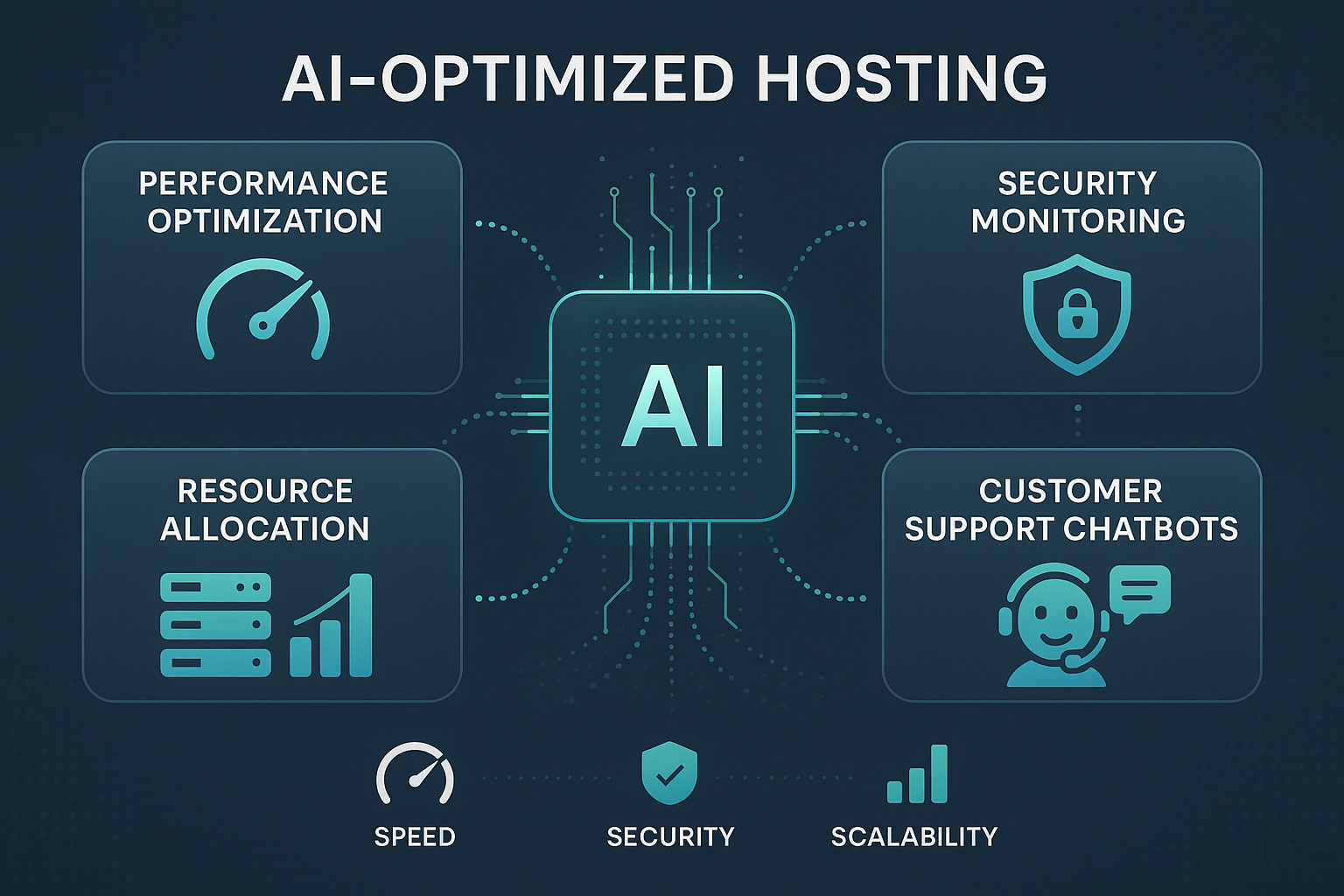
The narrative of web hosting has traditionally been one of infrastructure management, server uptime, and resource allocation. However, the introduction of Artificial Intelligence (AI) and Machine Learning (ML) is rewriting this narrative entirely. These technologies are transitioning hosting from a reactive service to a proactive, intelligent ecosystem. Think of it like moving from a manual car to an autonomous vehicle – both get you to your destination, but one learns, adapts, and optimizes the journey independently.
For many years, web hosting relied on human administrators to monitor systems, respond to alerts, and manually adjust settings. While effective, this approach had inherent limitations in speed, scale, and the ability to detect subtle patterns indicative of impending issues. AI and ML address these limitations head-on by analyzing vast datasets, learning from historical patterns, and making autonomous decisions. This means better uptime, faster loading speeds, and significantly enhanced security – all critical components for any online presence, from a small blog to a large e-commerce platform.
One hosting provider, recounting their early days of adopting rudimentary automation, shared a story that resonates. “We used to have a team dedicated solely to monitoring server load and manually migrating sites during peak hours,” explained Sarah, a long-time sysadmin. “It was like playing whack-a-mole. The moment we implemented an early script that could suggest migrations based on CPU usage, we saw a noticeable drop in downtime. Now, with advanced machine learning, the system just does it before we even realize there was a potential problem. It’s like having an army of super-smart engineers working 24/7.” This anecdote perfectly encapsulates the shift from reactive human intervention to proactive, intelligent automation in hosting.
Predictive Performance Optimization and Resource Management
In the competitive digital landscape of 2025, website performance isn’t just a luxury; it’s a necessity. Slow loading times directly translate to lost visitors, lower search engine rankings, and decreased conversions [1]. This is where AI and machine learning will truly shine by 2026, ushering in an era of unprecedented performance optimization.
The traditional model of resource allocation often involved over-provisioning (giving a website more resources than it typically needs, just in case) or reactive scaling (adding resources only after a problem has occurred). Both approaches have their drawbacks – over-provisioning is costly and inefficient, while reactive scaling can still lead to temporary performance dips.
AI-driven systems, however, are fundamentally different. They continuously monitor hundreds, if not thousands, of performance metrics across all hosted websites: CPU usage, RAM consumption, disk I/O, network bandwidth, database queries, and even application-level performance indicators. More importantly, they learn from these metrics over time. An AI model can identify recurring traffic patterns for a specific website – perhaps a surge every Tuesday at 10 AM, or a spike after a marketing campaign launch.
Real-time Load Balancing and Dynamic Resource Scaling
By 2026, AI-optimized hosting will leverage these learned patterns to predict future demand with remarkable accuracy. Imagine an e-commerce site preparing for a flash sale. Instead of a human administrator manually scaling up server resources an hour before, the AI system, having learned from past sales events, automatically provisions additional CPU cores, RAM, and database capacity minutes before the expected surge. This proactive approach ensures seamless performance, even under extreme loads.
- Anticipatory Scaling: AI analyzes historical data and real-time trends to predict future resource needs, scaling up or down automatically. This prevents bottlenecks before they occur and minimizes unnecessary resource consumption during quiet periods.
- Intelligent Load Balancing: Instead of simply distributing traffic evenly, AI-powered load balancers will consider server health, geographical location of users, and even specific application requirements to route requests to the most optimal server, ensuring the fastest response times.
- Workload Characterization: Machine learning algorithms will classify different types of website workloads (e.g., static content delivery, dynamic database-heavy applications, video streaming) and automatically fine-tune server configurations for each, ensuring maximum efficiency.
For instance, if a server hosting several WordPress sites starts showing early signs of I/O contention, an AI system can predict a potential slowdown within the next hour. It can then automatically migrate some of the more resource-intensive WordPress installations to less burdened servers or even spin up new temporary instances, all without any noticeable interruption to users. This level of proactive management is a game-changer for site owners. For those looking to understand the best hosting solutions for optimal website performance, delving into articles like 10 Best Web Hosting Companies for Fast, Reliable, Secure Websites can provide valuable context on current standards.
Table: AI-Driven Performance Metrics & Actions
| Metric Monitored | AI Prediction | Automated Action | Impact |
|---|---|---|---|
| CPU Usage | Anticipated traffic surge | Provision additional CPU cores/migrate workloads | Prevents slowdowns, maintains responsiveness |
| RAM Consumption | Potential memory leak or process overload | Restart problematic services, allocate more RAM | Stabilizes applications, avoids crashes |
| Disk I/O | Impending database bottleneck | Optimize database queries, switch to faster storage | Accelerates data retrieval, improves application speed |
| Network Latency | Regional network congestion | Route traffic through alternative pathways/CDNs | Ensures consistent global access speeds |
| Application Errors | Emerging software bug or incompatibility | Rollback recent updates, isolate problematic services | Reduces downtime, enhances user experience |
This dynamic, self-optimizing environment significantly enhances the reliability and speed of websites, crucial for user engagement and SEO. The continuous learning aspect of ML means these systems become even more efficient and accurate over time, constantly refining their predictions and actions.
Advanced Cybersecurity with Machine Learning
The digital threat landscape is constantly evolving, with new vulnerabilities and attack vectors emerging daily. Traditional signature-based security systems often struggle to keep pace, leaving websites exposed to zero-day attacks and sophisticated persistent threats. By 2026, AI-optimized hosting will leverage machine learning to revolutionize cybersecurity, moving from reactive defense to proactive, predictive threat intelligence.
Imagine a digital guardian that never sleeps, constantly learning and adapting to new threats. This is the promise of ML in web hosting security. Instead of merely matching known malware signatures, ML algorithms analyze vast streams of data – network traffic, server logs, user behavior, and application requests – to detect anomalies that signify malicious activity.
A small web hosting company, known for its robust security, once faced a coordinated DDoS attack that bypassed their conventional firewalls. “It was terrifying,” recounted Mark, the lead security engineer. “Our systems were overwhelmed, and it took us hours to mitigate. After that, we invested heavily in ML-driven anomaly detection. Now, when a similar pattern emerges, the system flags it and often blocks it automatically, isolating the threat before it even reaches our servers. It’s like having a sixth sense for cyberattacks.” This shift towards predictive capabilities is a testament to the power of machine learning in protecting digital assets.
Predictive Threat Detection and Real-time Response
Machine learning models can identify subtle deviations from normal behavior that might indicate an intrusion, even if the attack method is entirely new. For example:
- Behavioral Analysis: ML algorithms profile normal user and application behavior. Any deviation – a sudden spike in login attempts from unusual locations, an uncommon database query pattern, or unexpected file modifications – can trigger an alert or an automated blocking action.
- Malware Detection: Beyond signatures, ML can analyze the characteristics and behavior of new files or processes to determine if they are malicious, even if they’ve never been seen before. This includes polymorphic malware that constantly changes its code to evade detection.
- DDoS Attack Mitigation: ML can differentiate between legitimate traffic surges and coordinated denial-of-service attacks. By learning the normal traffic patterns for each hosted site, it can quickly identify and neutralize malicious traffic flows, often diverting or scrubbing them before they impact server performance.
- Vulnerability Scanning and Patching: AI can autonomously scan for vulnerabilities in applications and server configurations, prioritize critical patches, and even initiate automated patching processes, significantly reducing the window of exposure.
In 2026, advanced AI systems will not only detect threats but will also learn from them. Every thwarted attack, every identified vulnerability, becomes a data point that refines the ML model, making it more intelligent and resilient. This continuous learning loop creates a self-improving security infrastructure. Hosting providers that have implemented sophisticated security measures are often featured in reviews, such as those found on A2 Hosting Review: 20x Faster Web Hosting, showcasing the tangible benefits of such investments.
Enhanced Incident Response and Forensic Analysis
Beyond prevention, ML will dramatically improve incident response. When a security event occurs, AI can rapidly analyze logs and network data to pinpoint the origin, scope, and impact of the breach, providing human security teams with critical information for swift remediation. This includes:
- Automated Forensics: Quickly sifting through terabytes of log data to identify the sequence of events leading to a breach, drastically cutting down investigation time.
- Threat Intelligence Sharing: AI systems can anonymously share threat patterns and attack methodologies with a broader network of AI-powered security platforms, creating a collective defense mechanism that benefits all participating providers.
The human element remains crucial for strategic decision-making and complex investigations, but AI will empower security teams with unparalleled tools for detection, prevention, and response. The future of web hosting security is intrinsically linked to the advancements in machine learning.
The Rise of Hyper-Automation in Hosting Operations
The operational backbone of any web hosting provider involves countless routine, repetitive tasks. From server provisioning and software updates to backup management and error resolution, these processes are essential but consume significant human resources. By 2026, automation in hosting will transcend basic scripting, evolving into hyper-automation powered by AI and machine learning.
This shift means moving beyond simple “if-this-then-that” rules to intelligent systems that can learn, adapt, and make complex operational decisions. Imagine a data center that largely manages itself, identifying potential hardware failures, ordering replacements, and even coordinating their installation, all with minimal human oversight.
“We used to spend hours every week just updating software across hundreds of servers,” recalled David, an operations manager at a major hosting firm. “A few years ago, we automated the basic patching. But now, with our ML-driven system, it not only patches but also predicts potential conflicts, tests updates in a sandbox environment, and schedules deployment during off-peak hours based on predicted traffic. It’s transformed our team’s focus from mundane maintenance to strategic infrastructure development. We’re truly experiencing AI-optimized hosting on the operational front.”
Automated Server Management and Maintenance
AI will orchestrate almost every aspect of server lifecycle management:
- Predictive Maintenance: ML models analyze hardware performance data (temperatures, fan speeds, error logs) to predict component failures before they occur. This allows hosting providers to proactively replace failing hard drives, power supplies, or memory modules, preventing unexpected downtime.
- Automated Provisioning and Configuration: Setting up new servers or virtual instances will become an entirely automated process. AI will select optimal hardware, install operating systems, configure network settings, and deploy application stacks based on predefined requirements and learned best practices.
- Software Updates and Patching: As mentioned, AI will handle updates with intelligent scheduling, dependency management, and automated rollback capabilities in case of issues, ensuring systems are always secure and up-to-date without human intervention.
- Backup and Disaster Recovery: AI will optimize backup schedules, verify data integrity, and even simulate disaster recovery scenarios to ensure rapid and successful restoration in the event of an outage.
These capabilities significantly reduce operational costs, minimize human error, and free up highly skilled engineers to focus on innovation and complex problem-solving rather than routine tasks. The efficiency gains are substantial, leading to more competitive pricing and superior service quality for end-users. Businesses seeking highly reliable hosting might benefit from exploring options like 7 Best Search Engine Optimization Web Hosting Companies 2023 which often emphasize operational excellence.
Intelligent Error Detection and Self-Healing Systems
One of the most impactful applications of AI in hosting operations will be the development of self-healing infrastructure:
- Anomaly Detection: ML algorithms constantly monitor system logs, performance metrics, and application behavior for any anomalies that could indicate a problem. This isn’t just about threshold alerts; it’s about detecting subtle patterns that signify an impending issue.
- Root Cause Analysis: When an error occurs, AI can rapidly analyze vast amounts of data to identify the root cause, rather than just treating symptoms. For example, it could differentiate between a genuine application error and a network issue masquerading as one.
- Automated Remediation: For common issues, AI systems will trigger automated remediation actions, such as restarting a service, reallocating resources, or isolating a problematic component. For more complex problems, it will provide precise diagnostic information and recommended solutions to human engineers.
This level of automation means that many issues are resolved before they ever impact website visitors, leading to near-perfect uptime and significantly reduced reliance on human intervention for troubleshooting. The efficiency and reliability offered by hyper-automation will set a new standard for web hosting providers by 2026.
Enhanced Customer Experience and Support
Customer support is often the first point of contact for users experiencing issues, and it significantly shapes their perception of a hosting provider. By 2026, AI and machine learning will revolutionize customer experience, moving beyond traditional ticketing systems and call centers to offer proactive, personalized, and highly efficient support. This is a critical aspect of AI-optimized hosting that directly impacts user satisfaction and retention.
The frustration of navigating complex FAQs or waiting endlessly for a human support agent is a common pain point. AI aims to eliminate these frustrations by providing instant, accurate, and context-aware assistance.
Consider a user struggling with a WordPress plugin installation. Instead of submitting a ticket and waiting hours, an AI-powered chatbot could immediately identify the specific plugin, analyze the user’s hosting environment, cross-reference common issues, and provide step-by-step troubleshooting instructions or even offer to resolve the issue automatically. This level of responsiveness is transformative. The importance of reliable support cannot be overstated, and for WordPress users, finding optimal hosting is key; resources like 5 Best WordPress Hosting Solutions often highlight providers with excellent support.
AI-Powered Chatbots and Virtual Assistants
By 2026, AI chatbots will be the first line of defense for most customer inquiries. These won’t be the rudimentary rule-based chatbots of today but highly sophisticated virtual assistants capable of:
- Natural Language Understanding (NLU): Interpreting complex queries in natural language, understanding intent, and extracting relevant information.
- Contextual Awareness: Remembering past interactions and understanding the user’s specific hosting environment, services, and history to provide highly relevant assistance.
- Multi-channel Support: Seamlessly integrating across websites, messaging apps, and even voice interfaces.
- Automated Troubleshooting: Diagnosing common problems (e.g., website down, email not sending, slow performance) and providing immediate solutions or guiding users through fixes.
- Personalized Recommendations: Based on a user’s usage patterns and website type, AI can suggest upgrades, complementary services, or optimization tips.
A human anecdote illuminates this shift: “I remember when our support team was inundated with ‘my website is down’ tickets,” shared Maria, a customer service lead. “Now, our AI virtual assistant usually detects the issue before the customer even realizes it, and often resolves it automatically or prompts them with a solution. For complex issues, it gathers all the necessary diagnostic information, so when it escalates to a human, they have everything they need to jump right in. It’s made our human agents more effective and our customers much happier.”
Predictive Support and Proactive Issue Resolution
Beyond reactive support, AI will enable truly proactive customer service:
- Predictive Issue Detection: As discussed in performance optimization, AI will detect potential issues (e.g., an expiring domain, an overloaded database, an impending security vulnerability) before they impact the user and proactively notify them with solutions.
- Automated Resolution Suggestions: For issues that AI can’t resolve autonomously, it can provide highly specific troubleshooting guides or suggest relevant knowledge base articles, drastically reducing time-to-resolution.
- Personalized Onboarding and Guidance: AI can analyze a new user’s goals and technical proficiency to provide a tailored onboarding experience, offering tutorials and recommendations specific to their needs.
- Feedback Analysis: Machine learning can analyze customer feedback (surveys, support tickets) to identify common pain points and suggest improvements to services, documentation, or even product features.
This hyper-personalized and proactive approach to customer support will elevate the user experience, fostering greater loyalty and satisfaction. It transforms support from a cost center into a powerful differentiator, reinforcing the value proposition of automation in hosting.
Cost Efficiency and Sustainable Hosting Practices
While the benefits of AI in performance, security, and customer experience are often highlighted, its role in driving cost efficiency and promoting sustainable hosting practices is equally significant. By 2026, AI-optimized hosting will not only be more powerful but also more economically viable and environmentally responsible.
Running massive data centers requires immense amounts of electricity for servers, cooling, and network infrastructure. This translates to substantial operational costs and a significant carbon footprint. AI and machine learning offer powerful tools to address both challenges.
“Our electricity bill used to be astronomical,” explained Ben, the CEO of a mid-sized hosting provider. “We implemented smart sensors and basic automation for cooling, but it was still a brute-force approach. Once we integrated an ML system that analyzed weather patterns, server heat loads, and energy market prices in real-time, our energy consumption dropped by nearly 20%. It felt like magic, but it was just intelligent algorithms at work. This not only saved us a fortune but also aligned with our sustainability goals.” This kind of story highlights the tangible, bottom-line impact of AI in optimizing resource usage.
Optimized Energy Consumption and Resource Utilization
AI’s ability to analyze vast datasets and make intelligent predictions extends directly to optimizing energy usage:
- Smart Cooling Systems: ML algorithms can precisely control data center cooling systems by analyzing server heat output, ambient temperatures, and even predicting future heat loads. This ensures optimal cooling with minimal energy waste, avoiding both over-cooling and under-cooling.
- Dynamic Power Management: AI can adjust power consumption at the server and component level, powering down idle resources or shifting workloads to more energy-efficient servers during off-peak hours.
- Server Virtualization Optimization: AI can intelligently consolidate virtual machines onto fewer physical servers during periods of low demand, reducing the number of active physical machines and thereby cutting down power consumption.
- Predictive Maintenance for Efficiency: By predicting hardware failures, AI ensures that components operate at peak efficiency for longer, reducing the energy waste associated with underperforming or faulty equipment.
These optimizations not only lead to significant reductions in electricity bills but also contribute to a lower environmental impact, aligning with the growing global emphasis on sustainability. Hosting providers that prioritize efficiency are often recognized in industry roundups, much like those featured in Best Web Hosting Reviews 2023.
Reduced Operational Costs and Infrastructure Management
Beyond energy, AI streamlines nearly every aspect of infrastructure management, leading to substantial cost savings:
- Reduced Human Labor for Routine Tasks: As discussed earlier, hyper-automation frees up highly paid engineers from mundane tasks, allowing them to focus on higher-value activities like system design and innovation.
- Optimized Hardware Lifespan: Predictive maintenance and intelligent workload distribution can extend the lifespan of server hardware, delaying costly replacement cycles.
- Efficient Capacity Planning: AI provides highly accurate forecasts of future resource needs, preventing both over-provisioning (wasted investment in unused hardware) and under-provisioning (cost of emergency upgrades and lost business due to downtime).
- Automated Compliance and Auditing: AI can continuously monitor configurations and logs to ensure compliance with regulatory standards, reducing the effort and cost associated with manual audits.
The cumulative effect of these AI-driven efficiencies is a more lean, agile, and cost-effective hosting operation. This allows providers to invest more in R&D, offer more competitive pricing, and ultimately deliver superior value to their customers, solidifying the role of automation in hosting as a key business driver.
Challenges and Considerations for 2026
While the future of AI and machine learning in web hosting is incredibly promising, it’s not without its challenges. As we move towards 2026, hosting providers and users alike must be mindful of potential hurdles and ethical considerations.
One significant challenge lies in the sheer volume and complexity of data required to train effective ML models. “We realized early on that garbage in means garbage out,” remarked Dr. Anya Sharma, a data scientist consulting for a major cloud provider. “To build reliable AI for predictive maintenance or anomaly detection, you need years of clean, labeled data. Collecting and curating that data, especially from diverse hosting environments, is a monumental task. It’s not just about having data; it’s about having good data.” This highlights the foundational effort required before sophisticated AI can deliver on its promises.
Data Privacy and Security
The very strength of AI – its ability to process vast amounts of data – also presents its biggest privacy challenge. Hosting providers handle sensitive information from millions of websites and users.
- Anonymization and De-identification: Ensuring that data used for training AI models is properly anonymized and de-identified to protect user privacy is paramount.
- Compliance: Adhering to stringent data protection regulations like GDPR, CCPA, and others becomes even more complex when AI systems are making autonomous decisions based on user data.
- AI-specific Security: AI models themselves can be vulnerable to attacks (e.g., adversarial attacks that trick the AI into making wrong decisions). Protecting the AI infrastructure is a new frontier in cybersecurity.
Ethical Implications and Bias
AI systems learn from the data they are fed. If this data contains historical biases (e.g., certain user groups consistently receiving less optimal service due to past infrastructure limitations), the AI might inadvertently perpetuate or even amplify these biases.
- Algorithmic Transparency: It’s crucial for hosting providers to understand how their AI systems make decisions. “Black box” AI models can be problematic, especially when decisions impact service quality or even security.
- Human Oversight: Despite the push for automation, human oversight remains critical. AI should augment human intelligence, not completely replace it, especially in situations requiring ethical judgment or novel problem-solving.
- Accountability: Establishing clear lines of accountability for decisions made by autonomous AI systems will be a key legal and ethical challenge.
Integration Complexity and Skill Gaps
Implementing sophisticated AI and ML solutions is not a trivial task.
- Legacy Systems: Integrating new AI technologies with existing legacy infrastructure can be complex and costly.
- Talent Shortage: There’s a significant global shortage of skilled AI engineers, data scientists, and ML specialists. Hosting providers will need to invest heavily in recruiting and training this talent.
- Continuous Learning and Adaptation: AI models are not static; they require continuous monitoring, retraining, and adaptation to remain effective against evolving threats and changing demands.
Addressing these challenges will require a concerted effort from hosting providers, technology developers, and regulatory bodies. A thoughtful approach to AI adoption, prioritizing privacy, ethics, and robust implementation, will be essential for realizing the full potential of AI-optimized hosting by 2026.
The Road Ahead: 2026 and Beyond for Web Hosting
Looking beyond 2026, the trajectory of AI and machine learning in web hosting points towards even more autonomous, intelligent, and integrated systems. The foundational changes discussed will not be the endpoint but rather a springboard for further innovation.
One visionary, Dr. Lena Petrova, a futurist specializing in digital infrastructure, often speaks of “cognitive hosting.” She explains, “By 2030, we won’t just have AI-optimized systems; we’ll have systems that understand the intent behind a website. An AI won’t just optimize server resources; it will understand your business goals, predict your audience’s behavior, and proactively suggest changes to your content delivery network or even your website’s architecture to maximize your success. It’s about moving from ‘smart’ to ‘wise’ hosting.” This future vision truly embodies the spirit of advanced AI-optimized hosting.
Fully Autonomous Hosting Environments
The next phase will likely see hosting environments that are almost entirely self-managing. Human administrators will transition from hands-on management to overseeing high-level strategies, auditing AI decisions, and developing new algorithms.
- Self-healing beyond components: AI systems will be capable of reconstructing entire damaged segments of infrastructure or migrating entire data centers seamlessly in the event of catastrophic failures.
- Predictive capacity planning at a global scale: AI will manage global server networks, dynamically shifting workloads across continents to optimize performance, reduce latency, and minimize energy consumption based on real-time global demand and environmental factors.
- Proactive compliance enforcement: AI will not just monitor for compliance but will actively reconfigure systems to ensure they remain compliant with evolving regulatory landscapes.
Integration with Edge Computing and IoT
The proliferation of Internet of Things (IoT) devices and the rise of edge computing will further intertwine with AI-powered hosting.
- Edge AI for faster processing: AI models will be deployed closer to data sources (at the edge) to process information faster, reducing latency and bandwidth requirements. Web hosting providers will integrate these edge resources into their core offerings.
- Optimized content delivery: AI will dynamically place content on edge servers based on predicted user demand, ensuring ultra-low latency for users worldwide.
Ethical AI and Explainable AI (XAI)
As AI becomes more pervasive, the emphasis on ethical AI and Explainable AI (XAI) will intensify.
- AI for Good: Developing AI that explicitly prioritizes user privacy, data security, and environmental sustainability.
- Transparency and Auditability: Designing AI systems whose decisions can be understood and audited by humans, addressing the “black box” problem. This will be crucial for maintaining trust and accountability.
The journey towards fully intelligent and autonomous web hosting is a continuous one. The predictions for 2026 represent significant milestones, but the evolution will not stop there. Hosting providers that embrace these transformations, investing in the technology and the talent, will be at the forefront of this new era of digital infrastructure. For businesses looking to stay ahead, understanding the nuances of web hosting and its future is critical, and resources like Best Website Hosting 2023: Our Experts Evaluate The Top Companies can offer valuable insights.
Conclusion
The landscape of web hosting is on the cusp of a profound transformation, driven unequivocally by the integration of AI and machine learning. As we peer into 2026, the vision of AI-optimized hosting and advanced automation in hosting is not merely aspirational; it is becoming a tangible reality. From proactive performance optimization that anticipates demand, to fortified cybersecurity that neutralizes threats before they materialize, and from hyper-automated operations that streamline infrastructure management, to hyper-personalized customer experiences, AI is fundamentally reshaping how websites are hosted and managed.
The benefits are clear: unprecedented reliability, unparalleled speed, ironclad security, and significant cost efficiencies. However, this revolution also brings with it critical considerations around data privacy, ethical AI development, and the need for new skill sets within the industry. The hosting providers that will thrive in this new era are those willing to invest in these technologies, meticulously curate their data, and responsibly navigate the ethical implications.
For businesses and website owners, the implications are equally significant. Choosing an AI-powered hosting provider will soon become a benchmark for success, offering a competitive edge through superior uptime, faster user experiences, and robust protection against cyber threats. The era of passive hosting is giving way to an intelligent, adaptive, and autonomous future.
Actionable Next Steps:
- For Hosting Providers:
- Invest in Data Infrastructure: Begin collecting and cleaning vast datasets relevant to performance, security, and operational metrics. This data is the lifeblood of effective AI.
- Prioritize AI Talent: Recruit or upskill existing teams in AI engineering, machine learning, and data science.
- Pilot AI Solutions: Start with targeted AI implementations, such as predictive maintenance or advanced anomaly detection, and scale gradually.
- Develop Ethical AI Frameworks: Establish clear guidelines for data privacy, algorithmic transparency, and human oversight in AI decision-making.
- For Businesses & Website Owners:
- Research AI-Forward Providers: As 2026 approaches, actively seek out hosting providers that are transparent about their AI/ML implementations and offer tangible benefits.
- Understand AI’s Role in Your Hosting: Ask potential providers specific questions about how AI contributes to their uptime, security, and performance guarantees.
- Prepare for Intelligent Features: Be ready to leverage AI-driven insights for your website’s performance, security, and even marketing strategies offered by your host.
- Advocate for Transparency: Support providers who prioritize ethical AI practices and provide clear explanations of how AI impacts your service.
The future of web hosting is intelligent, automated, and incredibly exciting. Embracing this evolution is not just an option but a necessity for anyone operating in the digital sphere.
References
[1] Google. (n.d.). Impact of loading time on user experience. Retrieved from https://developers.google.com/speed/docs/insights/v5/about
Discover more from inazifnani
Subscribe to get the latest posts sent to your email.