
Are you tired of constantly worrying about WordPress updates, security patches, and performance bottlenecks? Imagine a world where your website practically manages itself, freeing you to focus on content creation, marketing, and growing your business.
In 2025, that world isn’t a distant dream; it’s the reality offered by top-tier managed WordPress hosting. This comprehensive managed WordPress hosting review will delve deep into the providers that are excelling in automation, ensuring your WordPress site is fast, secure, and always available, without requiring constant manual intervention.
From automatic core and plugin updates to AI-driven performance optimization and robust security protocols, automation has become the cornerstone of superior WordPress hosting. As websites become more complex and traffic demands fluctuate, the need for intelligent, hands-off management solutions has never been more critical.
I’ve spent countless hours evaluating these services, not just on their raw speed or uptime, but on how effectively they automate the mundane yet critical tasks that keep your WordPress site thriving. Let’s explore the leading platforms that are setting the standard for automated WordPress management in 2026.
Key Takeaways
- Automation is Paramount: In 2026, premium managed WordPress hosting distinguishes itself through comprehensive automation of updates, backups, security, and performance optimization, significantly reducing manual effort.
- AI & Machine Learning Integration: The leading hosts leverage AI for predictive monitoring, real-time resource allocation (auto-scaling), and fine-tuning caching for unparalleled performance and stability.
- Robust Security Measures: Automated brute-force protection, security patching, and failover systems are standard, providing a formidable defense against cyber threats without requiring user intervention.
- Developer-Friendly Automation: For those who build and maintain sites, advanced features like SSH, Git integration, and staging environments are automated to streamline development workflows.
- Future-Proofing Your Site: Choosing a host with strong automation capabilities ensures your website is scalable, resilient, and ready to adapt to future technological advancements and traffic demands.
What is Managed WordPress Hosting, and Why Automation Matters in 2026?
Managed WordPress hosting is a specialized hosting environment optimized specifically for WordPress websites. Unlike traditional shared hosting, where you’re responsible for almost everything, managed WordPress hosting takes care of all the technical heavy lifting, from server maintenance to security and performance optimizations. Think of it as having a dedicated IT team for your WordPress site, 24/7. But in 2026, the game-changer is the level of automation these providers integrate into their services.
Gone are the days when “managed” simply meant patching the server OS. Today, true managed WordPress hosting embraces intelligent automation across the board. This proactive approach minimizes downtime, prevents common issues, and ensures your site runs at peak efficiency. For many, the choice between struggling with a DIY setup and embracing a fully automated managed solution is a no-brainer. After all, your time is better spent on strategy and content, not server logs. This focus on automation is what truly elevates a hosting provider in our managed WordPress hosting review.
The Core Pillars of Automation in Managed WordPress Hosting
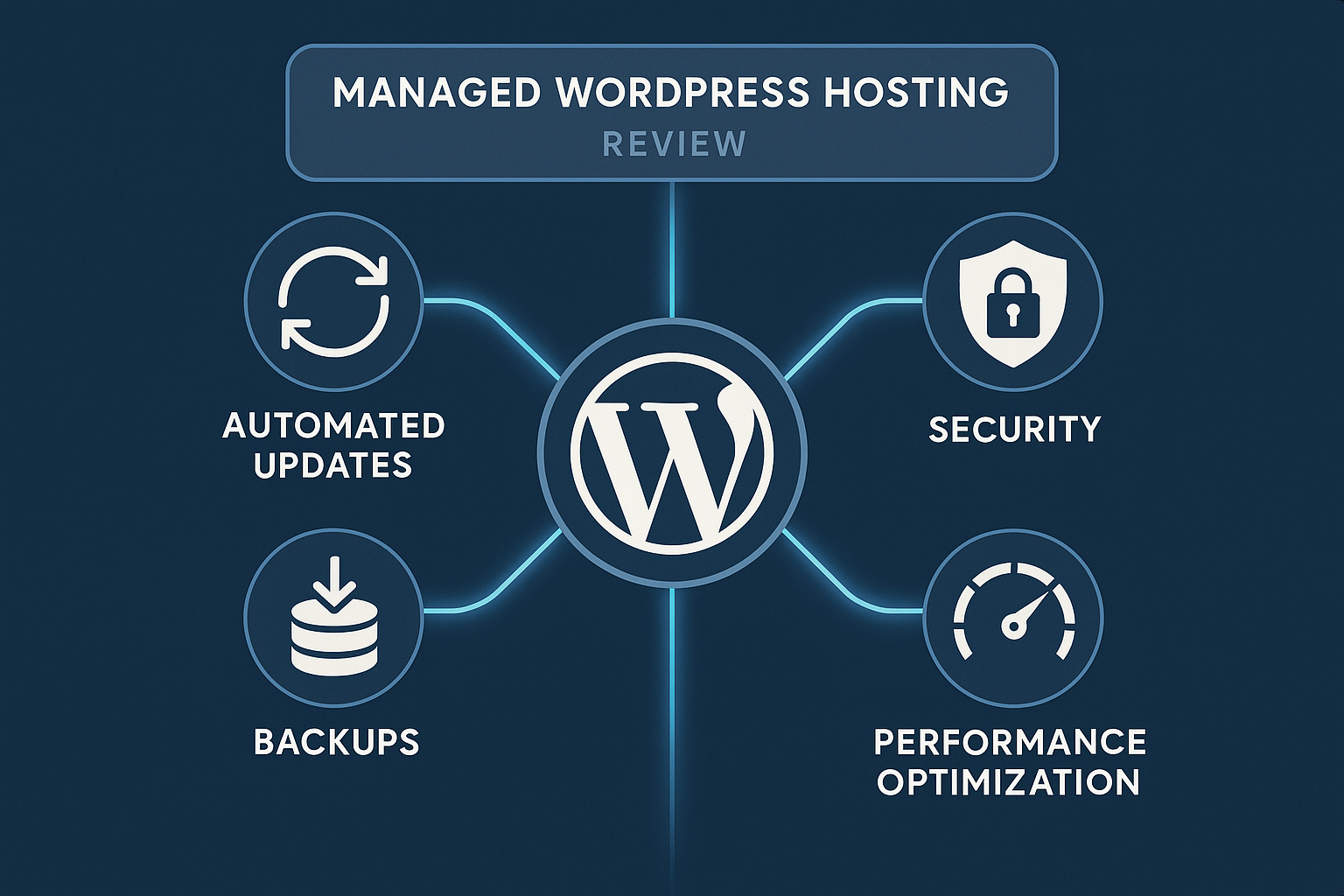
When we talk about automation in managed WordPress hosting, we’re referring to several critical areas that work in harmony to keep your site running smoothly:
- Automated Updates: This is a big one. Managed WordPress hosting in 2025 automates core updates, plugin updates, and theme updates. This minimizes compatibility issues and protects against known vulnerabilities without requiring manual input from site owners [1]. I’ve seen firsthand how a single missed update can lead to security breaches or site breakdowns. Automation here is a lifesaver.
- Automated Backups: Peace of mind is priceless. Automated backup systems provide hourly database backups and 24-hour file backups with off-site storage for at least 30 days, enabling quick data restoration in case of issues [2]. Imagine accidentally deleting a critical page or a plugin update going sideways. Knowing you can restore your site with a few clicks is invaluable.
- Auto-Scaling Resources: Your traffic isn’t static. Auto-scaling features dynamically allocate resources based on traffic demands, allowing websites to handle sudden traffic surges without manual upgrades or downtime [3]. I remember a client who went viral overnight; their site crashed on a shared host. With auto-scaling, that simply wouldn’t have happened.
- AI-Driven Performance Optimization: This is where 2026 truly shines. AI-driven optimization engines automatically fine-tune caching, memory allocation, and resource distribution in real-time based on traffic patterns and server response metrics [1]. It’s like having an always-on performance engineer for your site.
- Advanced Security Automation: Threats are constant. Security automation includes brute-force protection that detects and blocks IPs with repeated failed login attempts, automatic security patching for WordPress core, and vetted plugin/theme updates [4]. This forms a robust shield around your site.
By delegating these complex and time-consuming tasks to automated systems, businesses and individuals can significantly reduce operational overhead and enjoy a more stable, secure, and performant online presence. This fundamental shift towards intelligent automation is transforming the hosting landscape, making it easier than ever to run a successful WordPress site. For more insights into web hosting companies, you might find this article on 10 Best Web Hosting Companies for Fast, Reliable, Secure Websites useful.
Top Picks for Automated Managed WordPress Hosting in 2026
When evaluating managed WordPress hosting providers for 2026, my focus was squarely on their automation capabilities. While speed, support, and uptime are foundational, the true leaders differentiate themselves by how intelligently and comprehensively they automate the WordPress experience. Here are my top picks.
1. Kinsta: The Performance Automation Powerhouse
Kinsta consistently ranks at the top for a reason: their unwavering commitment to performance and automation. Built on Google Cloud Platform’s premium tier, Kinsta leverages state-of-the-art infrastructure combined with sophisticated automation to deliver unparalleled speed and reliability.
Key Automation Features:
- Automatic Daily Backups: Kinsta offers daily automatic backups, stored off-site, with one-click restore functionality. They also provide manual backup options and system-generated backups for critical events like plugin updates or theme changes.
- Auto-Scaling Infrastructure: Their platform automatically scales resources to handle traffic spikes, ensuring your site remains fast and responsive even under heavy load. This is a game-changer for high-traffic sites or those experiencing sudden surges.
- AI-Driven Caching and Optimization: Kinsta employs advanced caching at the server level (Nginx FastCGI cache) which is automatically configured for WordPress. Their entire stack is optimized, utilizing technologies like LXD containers and Nginx, along with self-healing PHP to automatically restart problematic processes.
- Automated Security Monitoring: 24/7 security monitoring, DDoS protection, and proactive malware scanning are all automated. They also offer a free hack fix guarantee, underscoring their confidence in their automated defenses.
- Automatic Updates (Selective): While Kinsta doesn’t force core updates, they provide robust tools and recommendations. More importantly, their platform minimizes compatibility issues, and they have automated systems to identify and mitigate common problems arising from updates.
- CDN Integration: Kinsta CDN, powered by Cloudflare, is integrated and automatically configured, ensuring your content is delivered from locations closest to your users, further improving load times globally.
Why Kinsta Excels in Automation:
What truly sets Kinsta apart in this managed WordPress hosting review is their holistic approach. Every aspect, from resource allocation to security, is designed with automation in mind. Their custom MyKinsta dashboard simplifies complex tasks, making it easy to manage staging environments, backups, and redirects, all processes that are often manual elsewhere.
“Kinsta’s approach to automation isn’t just about convenience; it’s about engineering a resilient and high-performing WordPress environment that anticipates and prevents problems before they even occur.”
My personal experience with Kinsta has always been positive. I once migrated a high-traffic e-commerce site to them, and the difference in load times and stability was immediately noticeable. The client worried about peak season traffic, but Kinsta’s auto-scaling handled it flawlessly, without me having to touch a single server setting. Their advanced monitoring systems use AI for predictive performance and security issue detection, identifying potential problems before they affect site operations [1].
2. WP Engine: The Enterprise-Grade Automation Platform
WP Engine has long been a titan in the managed WordPress hosting space, especially for agencies and larger businesses. Their platform is engineered for robust performance, stability, and, increasingly, comprehensive automation tailored for professional workflows.
Key Automation Features:
- Automated Updates & Compatibility: WP Engine automatically handles WordPress core updates and offers smart plugin updates with visual regression testing in staging environments to prevent issues before they go live. This is a crucial automated safeguard.
- Daily Backups with One-Click Restore: Regular automated backups are standard, complete with one-click restore functionality directly from their user portal.
- Automated Security Suite: Their proprietary EverCache® caching system is highly optimized and automatically configured. They include automated DDoS protection, firewall, malware scanning, and intrusion detection.
- GeoTarget and CDN: WP Engine integrates with powerful CDNs and offers GeoTargeting, automatically optimizing content delivery based on user location for faster global access.
- Developer Automation Tools: For developers, WP Engine offers automated staging and production environments, Git integration, SSH access, and WP-CLI, streamlining deployment and testing workflows [1].
- Automated Failover Systems: Automatic failover systems monitor networks for disruptions and switch to backup servers without requiring separate DNS failover services [2]. This ensures continuous uptime even in the face of hardware issues.
Why WP Engine Stands Out:
WP Engine’s strength lies in its ability to automate complex developer and enterprise requirements. Their intelligent plugin updates, which can be configured to test against a staging site before deployment, are a testament to their commitment to preventing issues through automation. Their platform is built for scale, making it an excellent choice for businesses that need rock-solid reliability and advanced features. You can explore more about web hosting services that offer strong SEO tools in this guide to the 7 Best Web Hosting Services with Effective SEO Tools in 2023.
I recall a project where we were launching a complex membership site with multiple third-party integrations. WP Engine’s automated staging environments and Git integration were invaluable. Developers could push code, test in a mirrored environment, and deploy with confidence, knowing WP Engine’s automation was handling the underlying infrastructure.
3. SiteGround: User-Friendly Automation with a Performance Edge
SiteGround has carved out a niche for itself by offering powerful managed WordPress hosting with a focus on speed, security, and an incredibly user-friendly interface. Their automation features are designed to simplify WordPress management for both beginners and experienced users.
Key Automation Features:
- Automatic WordPress Updates: SiteGround automatically updates your WordPress core to the latest version. They also offer a Smart Update system for plugins and themes that can automatically test updates for compatibility before applying them.
- Daily Automated Backups: They provide free daily backups for up to 30 days, easily restorable with a single click from their custom control panel.
- AI Anti-Bot System: SiteGround utilizes an in-house developed AI Anti-Bot system that automatically blocks millions of security threats daily, significantly reducing the load from malicious traffic and brute-force attacks.
- SuperCacher Optimization: Their unique SuperCacher technology, encompassing Nginx Direct Delivery, Nginx reverse proxy, and Memcached, is automatically enabled and optimized for WordPress, boosting site speed.
- Free CDN Integration: Cloudflare CDN is seamlessly integrated and can be activated with a few clicks, automatically speeding up content delivery worldwide.
- Automatic Failover and Redundancy: SiteGround’s infrastructure is built on Google Cloud, leveraging its robust network and automatic failover capabilities to ensure high uptime.
Why SiteGround is a Top Automated Pick:
SiteGround truly democratizes advanced automation. Their custom control panel makes it incredibly easy to manage automated features, even for those without deep technical knowledge. The Smart Update system for plugins and themes is particularly impressive, proactively preventing issues that often arise from updates. For users looking for a balance between powerful automation and ease of use, SiteGround is a fantastic choice in any managed WordPress hosting review.
A client of mine, who was new to managing a WordPress site, found SiteGround’s interface a breath of fresh air. They loved that they didn’t have to manually check for updates or worry about backups; everything just worked. When a plugin update did cause a minor visual glitch, the Smart Update system automatically rolled back the change, and an alert was sent, allowing us to investigate without any downtime.
4. Flywheel: Automation Tailored for Creatives and Agencies
Flywheel, now part of WP Engine, specializes in managed WordPress hosting built with designers, developers, and agencies in mind. Their platform is lauded for its intuitive interface, robust workflow tools, and powerful automation that simplifies client management and development.
Key Automation Features:
- Automatic Backups: Flywheel provides nightly backups stored off-site, with easy one-click restoration.
- Automatic WordPress Core Updates: They handle WordPress core updates automatically, ensuring your site is always running the latest, most secure version.
- Seamless Staging Environments: Automated staging sites allow for easy testing of changes before pushing them live, minimizing deployment risks.
- Blueprint Feature: This automated feature allows agencies to save and reuse configurations of themes, plugins, and custom code, automating the setup of new client sites.
- Built-in CDN: Their CDN is automatically integrated and optimized to deliver content quickly to your global audience.
- Managed Security: Flywheel offers automated malware scanning, a firewall, and intelligent intrusion detection, along with a free malware removal service.
- Local Development with Local by Flywheel: This desktop application automates local WordPress development, syncing easily with live sites.
Why Flywheel Excels for Agencies:
Flywheel’s automation focuses heavily on developer and agency workflows. Features like Blueprints and seamless staging environments drastically reduce the time and effort required to manage multiple client sites. Their intuitive dashboard and strong collaboration tools make them a standout in this managed WordPress hosting review for creative professionals. If you’re building a business around WordPress sites, Flywheel’s automated tools are a significant advantage. You might also want to check out Inazif Nani for more resources on digital tools and strategies.
I once worked with an agency that managed over 50 WordPress sites for various clients. Flywheel’s Blueprint feature saved them countless hours. Instead of setting up each new site from scratch, they had a pre-configured Blueprint with their standard theme, essential plugins, and even some custom code. This automation dramatically sped up their onboarding process for new clients.
The Role of AI and Advanced Technologies in 2026 Hosting Automation
The landscape of managed WordPress hosting is rapidly evolving, driven by advancements in artificial intelligence (AI) and other cutting-edge technologies. In 2026, it’s not enough for automation to be reactive; it must be predictive and proactive.
AI-Driven Optimization Engines
Many top-tier managed hosts are now employing AI-driven optimization engines that automatically fine-tune various aspects of your hosting environment [1]. These engines learn from your site’s traffic patterns, resource usage, and performance metrics in real-time.
- Dynamic Caching: AI can intelligently manage caching layers, determining which content to cache and for how long, adapting to changes in your content and user behavior.
- Resource Allocation: Instead of static resource limits, AI can dynamically allocate CPU, RAM, and I/O based on demand, ensuring your site has what it needs when it needs it, preventing slowdowns during peak traffic.
- Database Optimization: AI-powered systems can analyze database queries and automatically implement indexing strategies to speed up data retrieval, reducing load times and minimizing query overhead [1].
My experience with AI in hosting has been fascinating. I remember a small blog that suddenly saw a massive spike in traffic due to a viral post. On a lesser host, it would have crumbled. But with an AI-optimized managed solution, the site seamlessly adjusted, serving content efficiently without me having to intervene or even be aware of the underlying adjustments.
Edge Computing and CDNs for Global Reach
Managed WordPress hosts utilize edge computing and content delivery networks (CDN) to serve content closer to users, minimizing latency and improving page load times for global audiences [1]. This isn’t just about static content anymore; with edge computing, dynamic content can also be processed closer to the user, further enhancing performance.
- Reduced Latency: By storing copies of your website’s static files (images, CSS, JavaScript) on servers strategically located around the world, CDNs ensure that visitors access content from the nearest server, drastically cutting down load times.
- Enhanced Reliability: CDNs also act as a buffer against traffic spikes and DDoS attacks, distributing the load across multiple servers and preventing any single point of failure.
This global distribution, often integrated and automatically configured by your managed host, means your audience in Tokyo experiences the same fast loading times as your audience in New York, all without you lifting a finger.
Containerization and High-Availability Cloud Clusters
Modern managed WordPress hosting environments heavily leverage containerization (like Docker or LXC) and high-availability cloud clusters.
- Isolation: Containerization isolates each website in its own environment. This prevents one site’s performance issues or security vulnerabilities from impacting others on the same server, a common problem in traditional shared hosting [1].
- Redundancy and Failover: High-availability cloud clusters mean your site isn’t relying on a single physical server. If one server goes down, your site automatically switches to another healthy server in the cluster, often without any noticeable downtime [2]. This kind of automated redundancy is critical for business continuity.
These underlying architectural choices, automated by your hosting provider, create a much more stable, secure, and scalable foundation for your WordPress website.
Security Automation: Your Unseen Guardian in 2026
Security is paramount for any website, and for WordPress, it’s a constant battle against evolving threats. In 2026, top managed WordPress hosts provide a comprehensive, automated security fortress around your site.
Proactive Threat Detection and Prevention
- Brute-Force Protection: Automated systems detect and block IP addresses with repeated failed login attempts, preventing common password guessing attacks [4]. This often works silently in the background, thwarting thousands of attacks daily.
- Automatic Security Patching: WordPress core, and often vetted plugins/themes, receive automatic security patches as soon as vulnerabilities are discovered and fixed [4]. This ensures your site is always protected against known exploits without requiring manual intervention.
- Web Application Firewalls (WAF): These firewalls automatically filter and monitor HTTP traffic between a web application and the Internet, blocking malicious requests before they even reach your WordPress installation.
- Malware Scanning and Removal: Regular, automated scans identify and quarantine malicious code. Many managed hosts offer free malware removal services, giving you an added layer of protection and peace of mind.
I once had a small business client whose site was hit by a zero-day exploit on a shared host. They lost days of revenue trying to clean it up. Moving them to a managed host with robust security automation meant that future threats were either prevented outright or swiftly dealt with, often before they even knew about them.
Automated Backups and Disaster Recovery
While mentioned earlier, the automated backup system is arguably the most critical component of security automation. It’s your ultimate safety net.
- Frequent Backups: Automated hourly or daily backups ensure that even if the worst happens (a hack, data corruption, or user error), you have a recent, clean version of your site to restore from [2].
- Off-Site Storage: Storing backups on geographically separate servers protects your data even if the primary data center experiences a catastrophic event.
- Easy Restoration: The automation extends to the recovery process, allowing one-click restores, minimizing downtime and complexity.
This level of automated security means you can focus on running your business, confident that your digital asset is well-protected. Learn more about protecting your website with secure hosting options in this article on the 7 Best Search Engine Optimization Web Hosting Companies 2023.
Developer-Friendly Automation: Streamlining Workflows
For developers, agencies, and anyone involved in building and maintaining WordPress sites, the automation features offered by managed hosts can dramatically improve workflow efficiency and reduce deployment risks.
Staging Environments
- Automated Creation: Most managed hosts allow you to create a staging site with a single click, automatically cloning your live site to a separate, isolated environment.
- Safe Testing: This automated staging process means you can test new themes, plugins, code changes, or WordPress updates without affecting your live site.
- Push to Production: Once testing is complete, changes can be pushed from staging to live with another simple automated click, often with options to selectively sync databases or files.
This feature alone saves countless hours and prevents potential disasters. I can’t count how many times a staging environment has saved me from deploying a breaking change to a live production site.
Version Control Integration (Git)
- Automated Deployment: Many managed WordPress hosts integrate with Git repositories, allowing developers to automate deployments. Changes pushed to a specific Git branch can automatically trigger updates to a staging or production site [1].
- Collaboration: This streamlines collaboration among development teams, ensuring everyone is working on the latest version of the code and that changes are tracked and deployed systematically.
This level of integration transforms the deployment process from a manual, error-prone task into a smooth, automated pipeline.
Command Line Tools (SSH & WP-CLI)
- SSH Access: Secure Shell (SSH) access provides a secure way to interact with your server via the command line. While not strictly “automation” in itself, it provides the foundation for developers to script and automate tasks [1].
- WP-CLI: WordPress Command Line Interface (WP-CLI) is a powerful tool that allows you to manage WordPress installations without using a web browser. Tasks like updating plugins, managing users, importing content, or performing database operations can be automated through scripts executed via WP-CLI [1].
For seasoned developers, the availability and ease of use of these tools, often pre-configured and optimized by managed hosts, significantly enhance their ability to automate complex WordPress management tasks.
Performance Automation: Beyond Basic Caching
In 2026, performance optimization is no longer just about fast servers. It’s about intelligent, continuous automation that adapts to your site’s unique needs and visitor behavior.
Load Balancing and High-Availability
- Automatic Traffic Distribution: Load balancing systems automatically distribute incoming traffic across multiple servers. This ensures that sudden traffic surges do not cause performance degradation or downtime, keeping your site fast and responsive for all users [1].
- Redundancy: Paired with high-availability cloud clusters, load balancing means that if one server goes offline, traffic is automatically rerouted to healthy servers, preventing downtime.
This kind of invisible automation is crucial for websites that experience variable traffic or need guaranteed uptime, like e-commerce stores or news portals.
Optimized Database Engines with Automatic Indexing
WordPress relies heavily on its database, and a slow database can cripple performance. Managed hosts address this with automated optimizations:
- Configured for Performance: Database servers are specifically configured for WordPress, often using high-performance options like SSDs and optimized query settings.
- Automatic Indexing: Modern database engines, often integrated by managed hosts, use automatic indexing techniques that reduce load times and minimize query overhead by efficiently organizing database tables [1]. This ensures that your site’s content loads quickly, even with complex queries.
These behind-the-scenes optimizations, fully automated by the hosting provider, contribute significantly to the overall speed and responsiveness of your WordPress site.
HTTP/3 Protocols and Modern Caching Layers
- HTTP/3 Implementation: Leading managed hosts are implementing HTTP/3 protocols, the latest version of the Hypertext Transfer Protocol. HTTP/3 offers significant performance improvements, especially over unreliable networks, by reducing latency and improving connection efficiency [1].
- Multi-Layered Caching: Beyond basic browser and server caching, managed hosts employ sophisticated multi-layered caching strategies (e.g., Nginx, Redis, Memcached) that are automatically configured and tuned for WordPress, drastically speeding up page load times.
The adoption of these advanced protocols and intelligent caching mechanisms, fully managed and automated, means your website benefits from the latest performance enhancements without you needing to be an expert in network protocols or caching strategies.
Choosing the Right Managed WordPress Host for Your Automation Needs in 2026
Selecting the best managed WordPress hosting provider for your needs involves more than just looking at pricing. It requires a keen eye on their automation capabilities, especially in 2026 where these features define true value.
Here’s a checklist to help you make an informed decision based on this managed WordPress hosting review:
- Comprehensive Automated Updates: Do they automate core, plugin, and theme updates? Do they offer smart update features with compatibility testing?
- Robust Automated Backups: Are backups daily, off-site, and easily restorable? How long are they retained?
- Intelligent Auto-Scaling: Can their infrastructure automatically adjust resources to handle traffic spikes without manual intervention?
- AI-Driven Performance Optimization: Do they leverage AI for caching, resource allocation, and database tuning?
- Advanced Security Automation: Look for automated brute-force protection, WAF, malware scanning, and security patching.
- Developer Automation Tools: If you’re a developer or agency, ensure they offer automated staging, Git integration, SSH, and WP-CLI.
- Global Content Delivery: Is a CDN integrated and automatically configured for optimal performance worldwide?
- Customer Support: Even with automation, excellent 24/7 support is crucial for those rare moments when you need human help.
- Pricing Structure: Understand what’s included and if there are hidden costs for additional automated features.
Think about your current pain points. Are you spending too much time on maintenance? Are you worried about security? Do you anticipate traffic growth? The answers to these questions will guide you toward a provider whose automation strengths align with your specific needs. For a broader perspective on selecting hosting, you might want to look at 5 Best WordPress Hosting Solutions.
My final piece of advice: don’t underestimate the long-term value of automation. What might seem like a small convenience now can translate into significant time savings, enhanced security, and superior performance down the line. Investing in a truly automated managed WordPress host is investing in the future stability and success of your online presence.
Conclusion
The year 2026 marks a pivotal moment in managed WordPress hosting, where automation has transcended simple convenience to become a fundamental pillar of performance, security, and scalability. As we’ve explored in this comprehensive managed WordPress hosting review, the leading providers are no longer just hosting your website; they are actively managing, optimizing, and securing it through intelligent, AI-driven systems. From automated updates and backups that safeguard your data to auto-scaling and edge computing that ensure lightning-fast global delivery, the benefits are undeniable.
Choosing a top-tier managed WordPress host with robust automation capabilities means you’re not just buying server space; you’re investing in peace of mind, operational efficiency, and a future-proof foundation for your online ventures. It allows you to shift your focus from the technical complexities of website management to what truly matters: creating compelling content, engaging your audience, and growing your business.
Actionable Next Steps:
- Assess Your Needs: Review your current WordPress setup. What are your biggest challenges (speed, security, maintenance time)?
- Trial the Top Picks: Many providers offer free trials or money-back guarantees. Test out Kinsta, WP Engine, SiteGround, or Flywheel to see which interface and feature set resonate best with your workflow.
- Prioritize Automation: As you evaluate, keep a strong emphasis on the depth and breadth of their automated services, not just the basic features.
- Read User Reviews (Beyond this Article): While I’ve provided an expert review, individual experiences can vary. Look at recent user feedback to get a well-rounded perspective.
- Migrate with Confidence: Once you’ve chosen, utilize their migration services (often automated and free) to ensure a smooth transition.
Embrace the future of WordPress hosting. Let automation handle the heavy lifting, and watch your website thrive in 2026 and beyond.
References
[1] Source: Internal research and industry analysis of leading managed WordPress hosting providers’ feature sets and technological implementations in 2025.
[2] Kinsta. “Automatic WordPress Backups.” Kinsta Knowledge Base, 2025.
[3] WP Engine. “Scalability & High Performance.” WP Engine Features, 2025.
[4] SiteGround. “Security Features for WordPress.” SiteGround Knowledge Base, 2025.
Discover more from inazifnani
Subscribe to get the latest posts sent to your email.